Eid al-Adha rules and practices
Eid al-Adha is an essential celebration in Islamic faith. It is one of the two Eid celebrations that are marked every year by Muslims across the world. It is time for thanksgiving and sharing with the needy. It is also a special time to be spent with family, relatives and friends. While observing this celebration, each Muslim must follow specific rules, traditions and practices for it to be acceptable.

What does Eid al-Adha mean? Eid al-Adha means the festival of sacrifice. It is a festival that lasts three days, and it marks Qurbani and the Hajj pilgrimage. The celebration is held to commemorate the sacrifice that Prophet Ibrahim was ready to perform of his son, Ismail, to Allah. Allah spared Ismail and sent down a ram for slaughter. According to the Islamic faith, Eid al-Adha is a time to be grateful to Allah (God) for all the blessings He has bestowed upon each Muslim.
Read also
Prayer time in Dubai: Fajr, Shuruq, Dhuhr, Asr, Maghrib, Isha
During the celebration, it is essential to share with the less privileged in society. The festival is important because it reminds all Muslims not to be pre-occupied with material possessions. Instead, they must ensure that they do not lose track of their spirituality.
Eid al-Adha rules and practices
Eid al-Adha is a festival that is marked through the act of Qurbani and donations to the needy. The festival is held within the first ten days of Dhu al Hijjah in the Islamic calendar. Since the calendar is based on the lunar year, the exact celebration dates vary depending on the time the new moon is seen. Eid al-Adha 2020 is projected to start on Sunday, 11th of August and end on Tuesday, 13th of August in Nigeria. It is necessary to note that the dates may vary depending on when the new moon will be sighted.
Read also
Prophet's Birthday: history of the holiday, when is it in 2022?
Did you know that the festival of sacrifice is more sacred than Eid al-Fitr? This festival is marked through the act of slaughtering an animal which is known as Qurbani. While this is not a pillar of Islam and is not mandatory during Hajj, it is a vital component of the Islamic religion. The Eid al-Adha rules that every Muslim should follow are as listed below.
Who should perform Qurbani?
Every Muslim of able means can perform Qurbani. The only people who are exempted from marking this important festival are:
- Muslims who do not own 52.5 tolas of silver, or wealth that has an equivalent value.
- Muslims who are not of sound mind.
- Muslims who are yet to reach puberty.
- Muslims who are on travel and are more than the allowed Shar’i distance from their homes or residences. The Shar’i distance is about 40-45 kilometres.
Read also
Opinion: Help! the future of my home town is not guaranteed by Tona Bakare
NB: A Muslim can perform Qurbani on behalf of other people, such as those who have already passed away. However, a parent must not provide Qurbani on their children’s behalf.
When is Qurbani done?
Qurbani, the act of slaughtering an animal, should be done on the 10th, 11th and 12th days of Dhul-Hijjah. The deed should be done as close to the completion of the Eid Salah as possible.
The animals to be slaughtered should be bought a few days before the slaughter. During the period before slaughter, they must be well fed and kept under favourable conditions.
Which animals can be slaughtered for Eid al-Adha?
Both male and female animals can be slaughtered. While it is not compulsory, it is preferable to choose male animals that are castrated. The sacrificed animal is called . The animals that can be slaughtered are:
Read also
Eid al-Adha 2022 Nigeria: dates, time, and meaning of the ceremony
- Goats and sheep – These should be at least one year old. One goat or sheep is adequate for one person.
- Buffalos, bulls or cows – These should be at least two years old. One cow or goat is adequate Qurbani for seven people.
- Camels – These should be at least five years old. One camel is enough Qurbani for seven people.
The person offering the Qurbani should own the animal. The animal must not be stolen or forcefully taken from another person. Once an animal is chosen for sacrifice, it cannot be given or sold to another person. In the ten days preceding the slaughter, the person offering the sacrifice should not remove any hair or nails from their body.
READ ALSO: Ramadan: history, meaning and purpose
The animals that are selected for slaughter should meet specific criteria. They must be healthy and free from any disease. Other specifications are:
Read also
Top details to know about prayer time in Dubai
- The animal(s) must not be blind. They must also not have one eye or lost a third or more of their eyesight.
- The animal(s) should not miss a third or more of their tail or ear since birth or through loss.
- The horns of the animal should not be broken off from their root.
- The animal(s) should not have a lame leg that is weak enough to render it/them unable to walk.
- The animal(s) should not be very thin or lean.
- The animal(s) should be able to walk to the place of slaughter.
- The animal(s) should not be toothless or miss more than half their teeth.
Regulations to follow during slaughter
When sacrificing the animal, these are the practices and traditions to observe:
- Use a very sharp knife to slaughter the animal(s.) Doing so avoids causing them unnecessary suffering.
- You or the butcher must never sharpen the knife in front of the animal(s.)
- You or the butcher should never slaughter any animal in the presence of another animal.
- Any outsourced butcher should not be paid using meat, fat or any other product from the slaughtered animal.
Read also
50+ Eid al-Adha greetings, quotes, and messages for 2022
According to the Islamic faith, it is best for the person offering Qurbani to sacrifice the animal themselves. However, if one does not know how to slaughter, they can outsource the services of an experienced person. During the sacrifice, the person offering the Qurbani must be present to witness. They should recite the words, Bismillahi Allahu Akbar, during the slaughter.
NB: No slaughtered animal should be skinned until it is completely cold.
Distribution of meat
One of the essential Eid al-Adha regulations involves the distribution of meat. The rules to observe are the following:
- The slaughtered animal should be divided into three equal parts. One part should be given to the family, the second part to friends or neighbours and the third part to the poor. Sharing with the poor is not limited to Muslims only. Both Muslims and non-Muslims can be given the meat.
- If one shares Qurbani with a partner or multiple partners, the meat is strictly divided by weight, and not by approximation.
- A Muslim can keep the skin of the slaughtered animal for personal use. If the skin is sold, all the proceeds should be donated to the less privileged people in the community.

Read also
Prayer time Abu Dhabi: learn when to pray in UAE
What if I missed Qurbani?
If you missed this festival in the previous years, you can make up for missing through sacrificing extra animals. You should calculate the number of years you have missed it, then determine the number of animals that you need to sacrifice.
What happens during the festival of sacrifice?
- On the first day of Eid al-Adha, the Takbir at dawn. The communal Salat ul-Eid prayers follow this recitation.
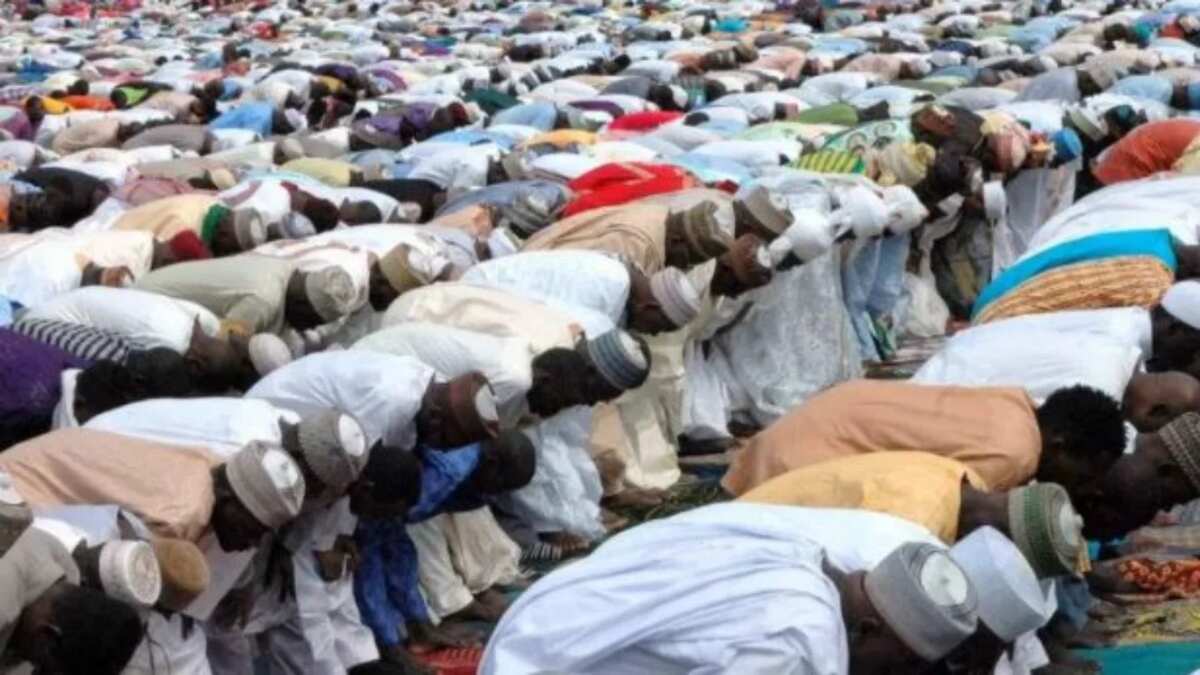
- During the festival, all Muslims regardless of age and gender wear their best clothes. Often, people wear new clothes. In Nigeria, for example, men wear their best Agbada. People then go the mosque for prayers where they thank Allah for all the blessings that He has given them. Usually, the greeting of Eid Mubarak is exchanged and gifts may also be exchanged.
- Communal prayers are said before midday. Only after these prayers is the animal slaughtered. When this is not followed, the slaughter becomes unacceptable.
- Once the sacrifice is made and the meat is divided according to the rules, regulations and traditions, people can prepare the meat as they like. The recipes used vary from one country to another. In South-East Asia, for instance, biryani is prepared, while in Turkey, Turkish kebabs may be prepared with the meat. In Nigeria, meat curries are often made. To accompany the meat, various yummy dishes are prepared depending on personal or family preferences.

Read also
What is Eid al-Adha and why do we celebrate it? Meaning and traditions
Eid al-Adha is an important Islamic festival that commemorates Prophet Ibrahim’s willingness to sacrifice his son, Ismail. From the above Eid al-Adha 2020 practices, it is apparent that this is a vital component of the Islamic faith, even if it is not mandatory. The festival offers every Muslim a chance to reflect and appreciate Allah’s blessings in their lives. It is also a chance to share with the poor and to spend time with family and friends. Eid Mubarak to all Muslims across the world!
READ ALSO:
- Ramadan 2019 timetable and Ramadan rules in Nigeria
- When is Ramadan fasting starting and ending in 2019?
Source: Legit.ng
ncG1vNJzZmivp6x7rbHGoqtnppdkfnOBkHBqbmWVnrFurctmmJ2gkWK%2FtrjErGSpqpGYwaqvxKxloaydoQ%3D%3D